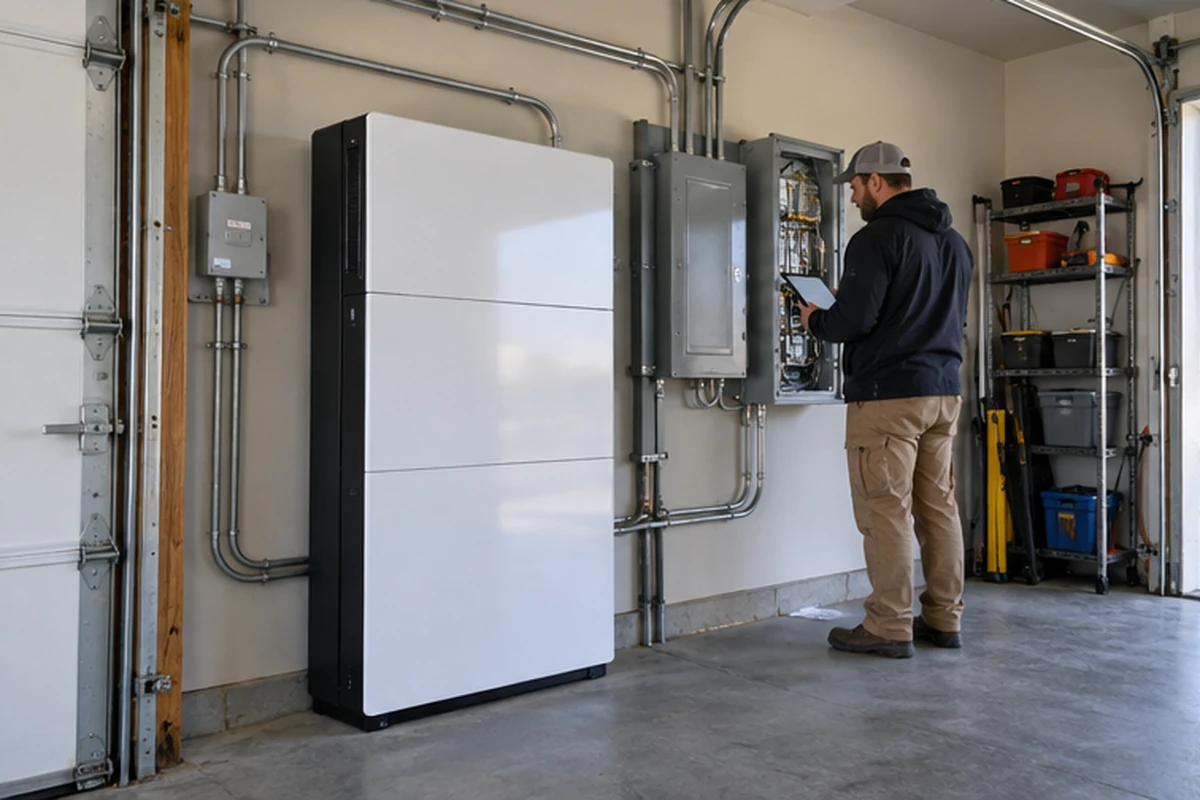
Define the backup goal first
Battery shopping is easier when the household decides what must stay powered during an outage. Refrigeration, internet equipment, lights and a few outlets require far less capacity than electric heating, central air conditioning or an entire home.
Ask for a written backup-load plan that identifies which circuits will remain available, the expected battery runtime and any equipment that cannot start from the proposed system.
Check electrical compatibility
A battery installation may involve the service panel, transfer equipment, inverter settings and utility interconnection. Existing rooftop solar can add another layer because not every inverter and battery combination supports the same backup functions.
An installer should inspect the electrical system rather than assuming a standard configuration. Older panels, limited service capacity or unusual wiring can change project scope.
Compare usable energy, power and warranty
Battery capacity tells only part of the story. Usable energy affects runtime, while power output determines how much equipment can operate at once. Warranty terms, cycling limits and operating temperature ranges are also important for long-term value.
When comparing products, use the same household load assumptions for every quote. Otherwise two runtime estimates may appear comparable while they are based on very different conditions.
Plan for solar and future loads
Pairing a battery with solar can allow daytime production to recharge storage during a prolonged outage when the system is designed for that function. Future EV charging or electrified heating may change the best system size and electrical layout.
Utility requirements and available programs evolve, so confirm current interconnection and tariff details with the utility and the Wisconsin Public Service Commission before installation.